Book Review: The Neverending Story
[md]January 12, 2026
Occasionally I revisit fantasy novels that I read, or that I wish I'd read, in my childhood: A Wrinkle in Time, A Wizard of Earthsea, The Dragonriders of Pern, The Phantom Tollbooth. Already this year, A Wrinkle in Time both impressed and disappointed me: it was somehow simultaneously both much weirder and much more simplistic than I had hoped.
Michael Ende's The Neverending Story is far from simplistic. For one, the book has twice the plot you remember from the movie, because the movie stops just before the halfway point of the book. Bastian gets the book, reads the book, and gets sucked into the book to save Fantastica. The movie somehow manages to both be a terrible adaptation of the entire book and a fantastic adaptation of the first half of the book. Pretty clever, honestly, because the second half of the book is far more serious, far less fun for children, but also far more interesting for adults. Let's dig in.
Characters #
-
Bastian Balthasar Bux: A rotund middle school-age child with a bad attitude, poor work ethic, mediocre grades, and a disinterest in life and family since his mother passed away. His bildungsroman arc spans the entire book. Ende's fat-shaming of Bastian is a bit much at times, but ultimately kind of sort of serves a purpose.
-
Carl Conrad Coreander: A cantankerous bookseller who, despite initial skepticism of Bastian and Bastian's (perceived) theft of The Neverending Story, begins to appreciate and befriend Bastian by the end of the story.
-
Atreyu: The focus of the hero's journey in the first half of the book, the section adapted by the much-loved 80s movie. A Greenskin (note: not faithfully adapted in the movie) hunter of purple buffalos from the Grassy Ocean (not to be confused with Hyperion's Sea of Grass or the Dothraki Great Grass Sea from A Song of Ice and Fire) who is called to save all of Fantastica. Notably, Atreyu doesn't really grow or change at all during the first half of the book -- he mostly just goes where people tell him to go. But during the second half of the book, Atreyu acts first as a partner, then as a foil to Bastian's bad behavior.
-
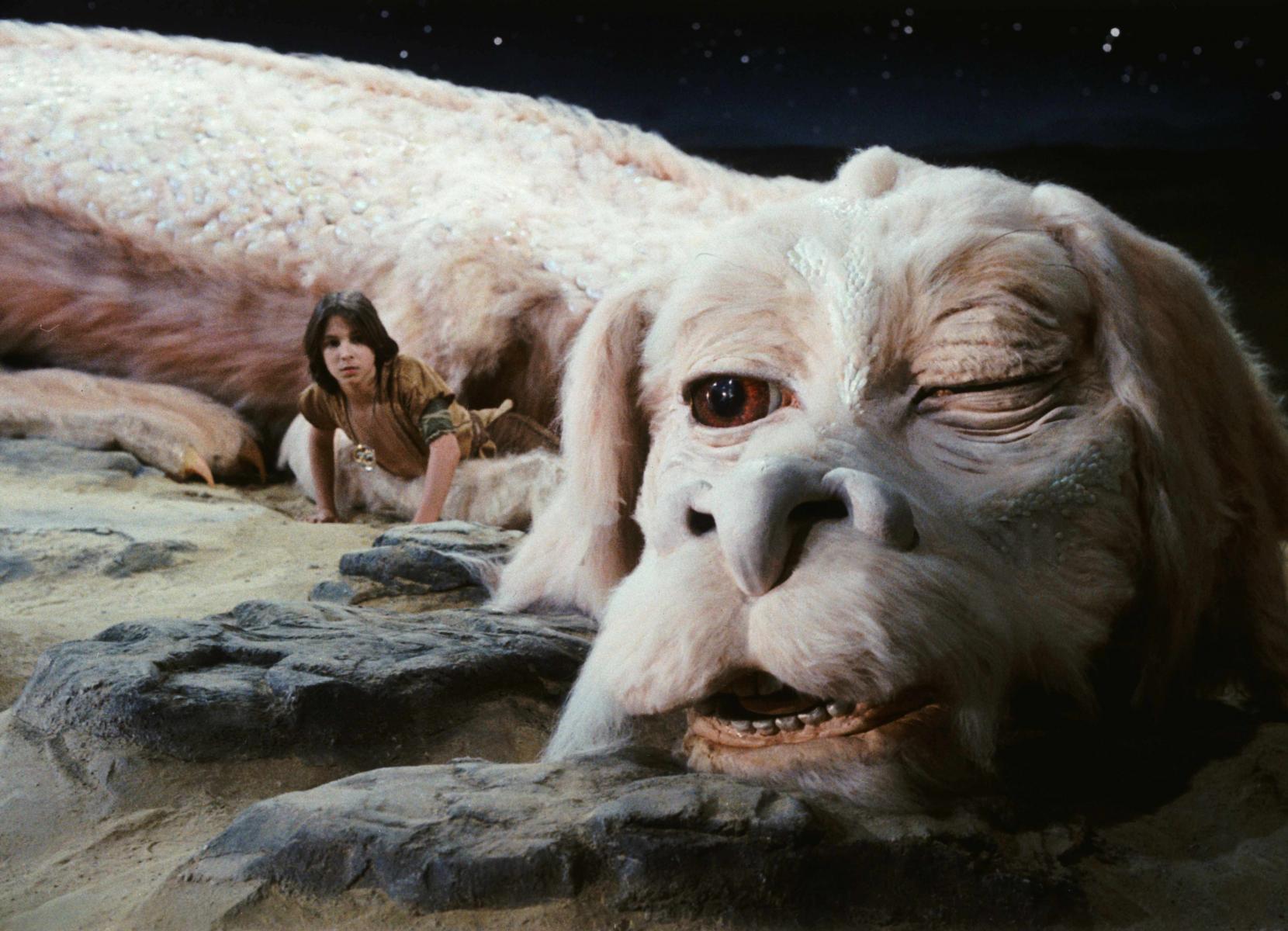
Falkor: A white luckdragon and Atreyu's (eventual) best friend, with a voice like a bronze bell, a persistently positive attitude, and a penchant for winking.
-
The Childlike Empress, the Golden Eyed Commander of Wishes. Heart and soul of Fantastica, who eventually lures Bastian into the book itself to give her a name: Moon Child.
I can't even begin to name the widespread cast of side characters, many with surprisingly elaborate backstories. In the words of Ende: that is another story and shall be told another time.
Plot #
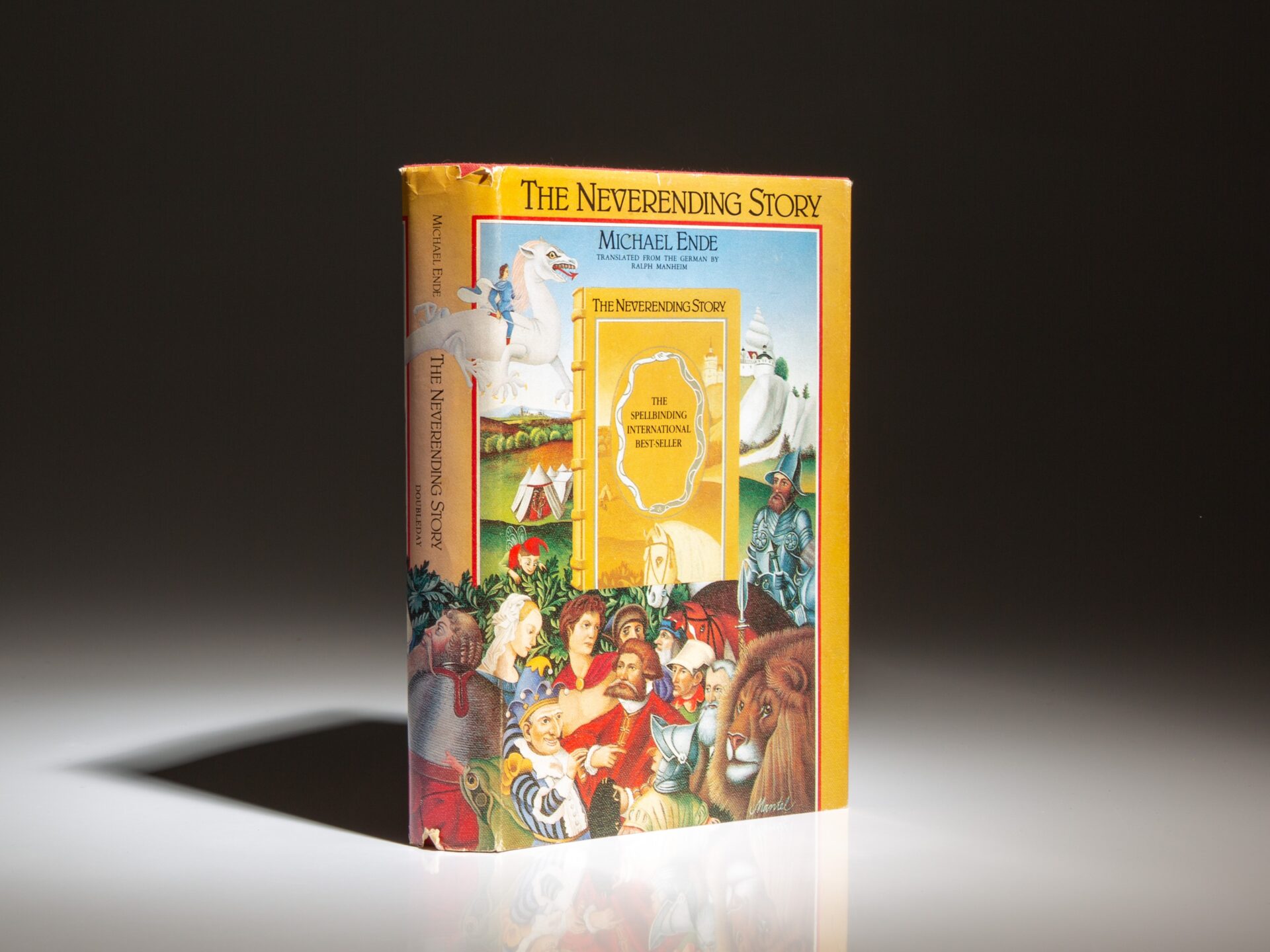
If, like me, you've only seen the movie, you only know the first (and worst) half of The Neverending Story. It follows a classic hero's journey fairytale arc, along the lines of Labyrinth or The Lion, the Witch, and the Wardrobe:
- a disaster strikes a fantasy world (Fantastica, a name superior to the movie's choice of Fantasia)!
- nobody can fix it
- only our awfully young hero can fix it
- our hero faces a series of trials wherein our awfully young hero proves their mettle and earns the friendship and respect of fantastic creatures
- our hero fixes the wrong in the fantasy world
In The Neverending Story, we have the added wrinkle of Bastian's perspective on top of this hero's tale, in which Bastian steals a book, skips school, then hides in the school attic while doing a lot of thinking about how cruel his teachers and classmates are and how lame his dad has been ever since his mom died. This framing device falls somewhere between Over the Garden wall (especially the Babes in the Wood episode) and Cloud Atlas: the stories intersect, but it's hard to tell what's 'real' (and what 'real' even means in the context of our story). There's a fair argument to be made here that the first half of the story, with the Nothing threatening Fantastica, isn't even 'real', only serving to bait readers into Fantastica.
As I already mentioned, everything changes at the halfway point of the book, when Atreyu and the Childlike Empress lure Bastian into Fantastica. Bastian initially resists, but ultimately winds up in Fantastica. And that's where everything changes. Because, instead of saving the day and riding Falkor into the real world to terrorize his enemies, as Bastian does in the movie, the book takes a darker path.
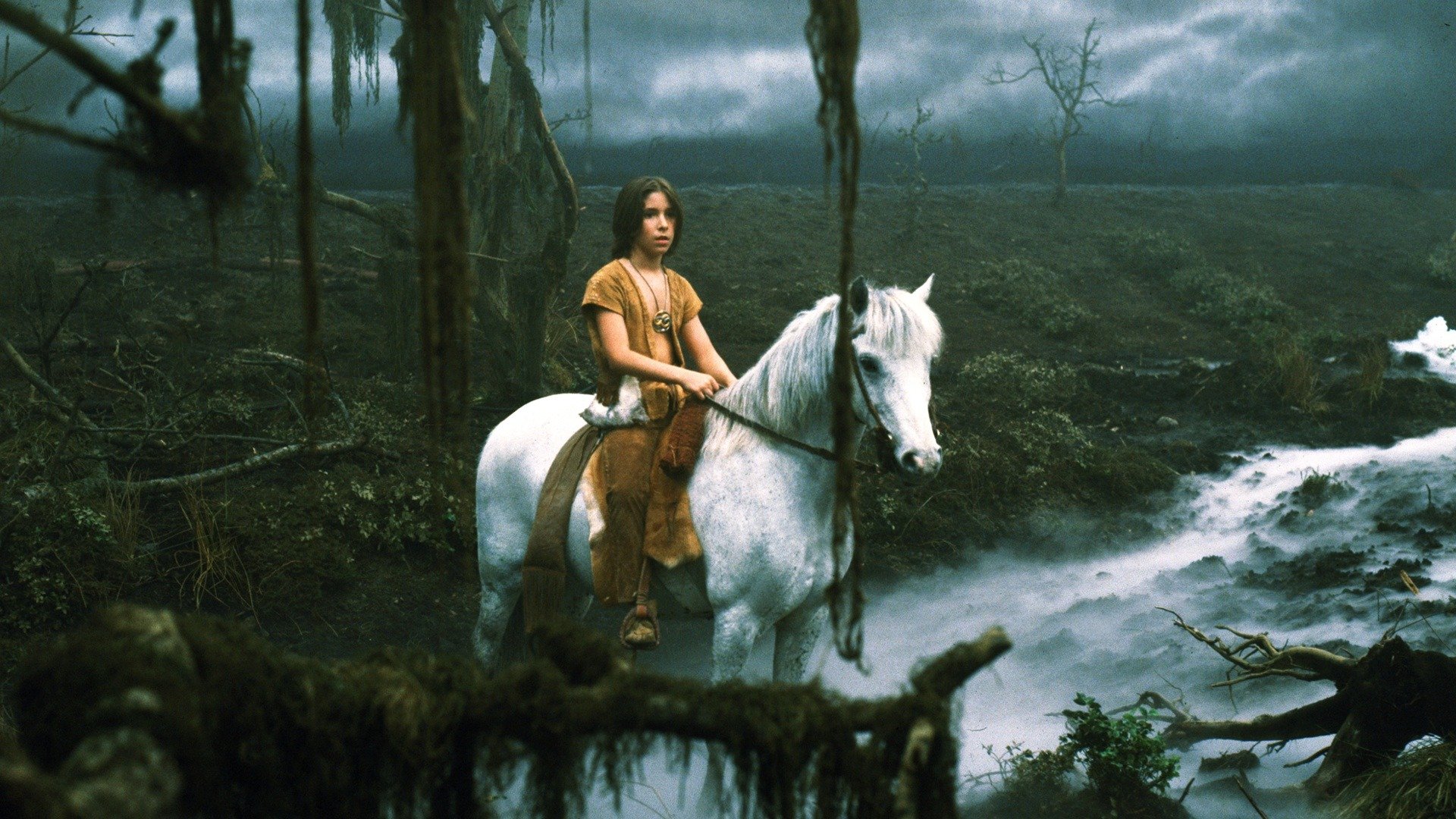
Sure, Bastian gets his wishes, and his entering the story seems to stop the spread of the Nothing from destroying Fantastica. But as Bastian transforms Fantastica with his wishes, he also changes himself and forgets his own story. Imagination isn't all good: just as the creatures of Fantastica become lies if they enter the human world, humans tend towards selfishness and exploitation in Fantastica.
Of course, this isn't all Bastian's doing -- he makes some very basic wishes, and AURYN elaborates on the wishes with some awfully genie-like wish-corrupting. But Bastian's bad attitude throws gasoline on the fire of corrupted wishes, eventually resulting in mass destruction, war, and death in Fantastica.
Lessons #
Ultimately, Bastian's character arc requires him to take responsibility for the bad things that he's done, both in real life and Fantastica. But it takes a lot of allegorical tales to get there.
Just because you can... #
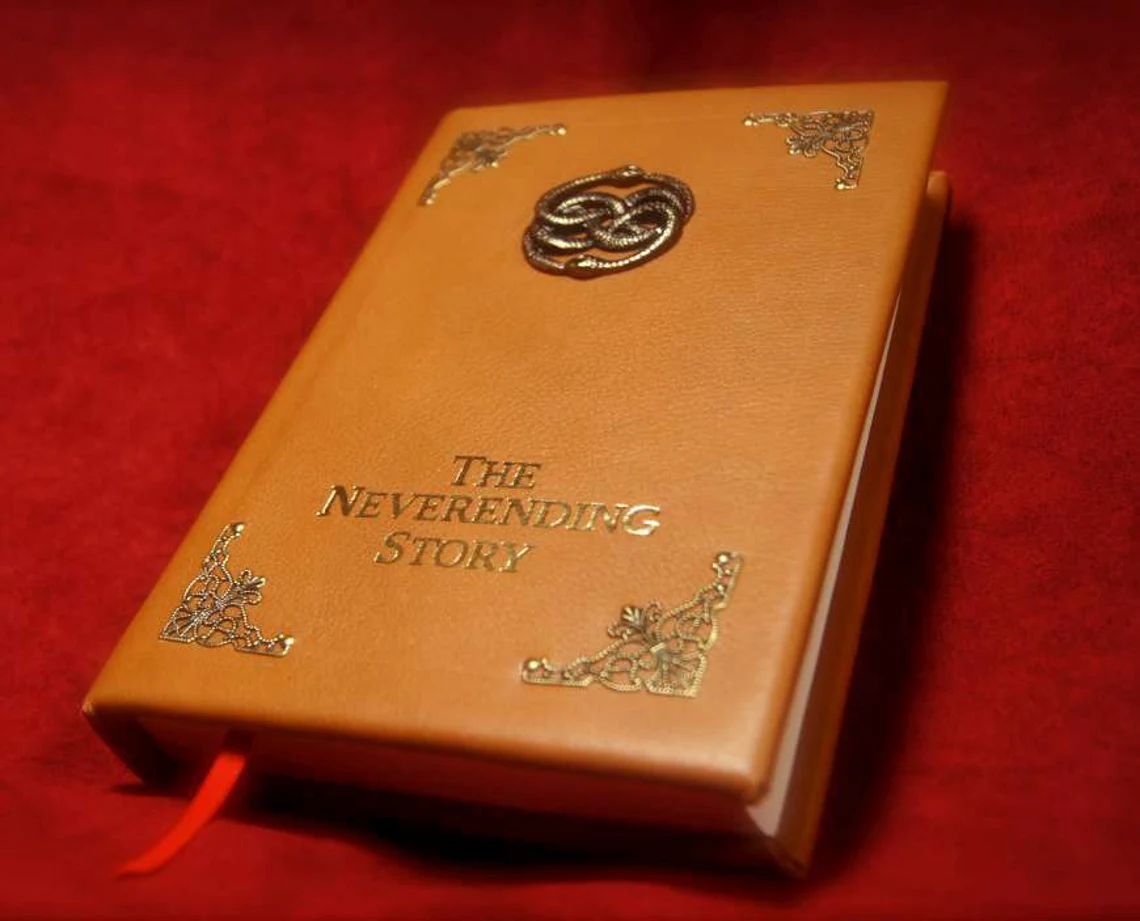
Moon Child's magic wish-granting and protecting amulet, AURYN, bears the inscription "DO AS YOU WISH". Bastian interprets this as a polite statement, akin to 'after you' from a doorman. But AURYN actually far more sinister:
"Grograman told me to find out what I really wanted. And the inscription on AURYN says the same thing. But for that I have to go from one wish to the next without ever skipping any. That's why I need the Gem." "Yes," said Atreyu. "It gives you the means, but it takes away your purpose." "Oh well," said Bastian, undismayed. "Moon Child must have known what she was doing when she gave me the amulet. You worry too much, Atreyu. I'm sure AURYN isn't a trap."
Turns out, AURYN is totally a trap. And a valuable lesson: as Jurassic Park (and the tech hegemony of 2026) teaches us, just because you can do something doesn't mean you should.
To reinforce that point, Ende repeatedly shows us how even good wishes can go bad:
And now Bastian was asking himself: Had it really been such a good idea to invent a dragon for Hero Hynreck? True, Hynreck had needed a chance to show his mettle. But was it certain that he would win? What if Smerg killed him? And what about Princess Oglamar? Yes, of course, she had been haughty, but was that a reason for getting her into such a fix? And on top of all that, how was he to know what further damage Smerg might do in Fantastica? Without stopping to think, Bastian had created an unpredictable menace. It would be there long after he was gone and quite possibly kill or maim any number of innocents. As he knew, Moon Child drew no distinction between good and evil, beautiful and ugly. To her mind, all the creatures in Fantastica were equally important and worthy of consideration. But had he, Bastian, the right to take the same attitude? And above all, did he wish to?
If only our tech overlords read this book and understood this lesson. BRB, gotta check my Ring doorbell to make sure my Amazon delivery person didn't piss on my yard...
Why matters #
On a slightly different note, Ende also repeatedly shows us how good done for the wrong reasons can generate less-than-good outcomes. For example, Bastian ditches Yikka, his mule, by inventing her a unicorn mate who can somehow make her a mother (remember, mules are normally nonviable and cannot produce offspring):
A person's reason for doing someone a good turn matters as much as the good turn itself.
Personally I think Ende could have gone further with this plot, but you have to stop somewhere. After all, that is another story and shall be told another time.
I appreciate Ende's point about doing things you love because they are right, not because they are easy, and how sometimes all you need to overcome impossible odds is love:
A detailed account of the battle for the Ivory Tower would take us too far. To this day Fantasticans sing countless songs and tell innumerable stories about that day and night, for everyone who took part saw it in his own way. Certain of the stories have it that Atreyu's army included several white magicians, who had the power to oppose Xayide's black magic. Of this we have no certain knowledge, but that would explain how, in spite of the armored giants, Atreyu and his followers were able to take the Ivory Tower. But there is another, more likely explanation: Atreyu was fighting not for himself, but for his friend, whom he was trying to save by defeating him.
History class is important #
Hardly a novel idea, but a core part of the book (emphasis mine):
You can only wish as long as you remember your world. These people here used up all their memories. Without a past you can't have a future.
On growing up #
The tail end of the book, where Bastian does most of his growth, spends a lot of time thinking about what makes a positive community, as Bastian wanders Fantastica, soulsearching, figuring out where and who he wants to be. Initially, he longs only for companionship:
For days and nights he had been wandering all alone. And because of being alone, he yearned to belong to some sort of community, to be taken into a group, not as a master or victor or as any special sort of person, but merely as one among many, perhaps as the smallest or least important, provided his membership in the community was unquestioned.
But eventually he learns that companionship alone isn't enough: he needs a community that knows, accepts, and loves him for who he really is:
Bastian, however, wanted to be an individual, a someone, not just one among others. He wanted to be loved for being just what he was. In this community of Yskalnari there was harmony, but no love.
This transformation becomes literal in the House of Change, where the matron (Dame Eyola) and Bastian both mature and transform as they figure out what they really want in life. I love the idea that we aren't just a continuous person, but instead that after sufficient time and growth we become entirely different people, just with the same name. To become a different person, the old you has to die (sort of like the old Star Trek teleporter gotcha):
When my mother grew old, she withered. All her leaves fell, as the leaves fall from a tree in the winter. She withdrew into herself. And so she remained for a long time. But then one day she put forth young leaves, buds, blossoms, and finally fruit. And that's how I came into being, for I was the new Dame Eyola. And it was just the same with my grandmother when she brought my mother into the world. We Dames Eyola can only have a child if we wither first.
The last chapters of the book, where Bastian has finally matured enough to want to return to the human realm and also accepted the difficulty of that task, are truly touching:
"Listen to me, Bastian Balthazar Bux," he said. "I'm no great talker. I prefer silence. But I will answer this one question. You are looking for the Water of Life. You want to be able to love, that's your only hope of getting back to your world. To love - that's easily said. But the Water of Life will ask you: Love whom? Because you can't just love in general. You've forgotten everything but your name. And if you can't answer, it won't let you drink. So you'll just have to find a forgotten dream, a picture that will guide you to the fountain. And to find that picture you will have to forget the one thing you have left: yourself. And that takes hard, patient work. Remember what I've said, for I shall never say it again."
A valuable lesson for us in reality, too: we not only have to find what we want out of life, we also have to make it happen.
Humor #
I didn't expect this book to be as hilarious as it sometimes is. My favorite joke is played perfectly straight: to give a hero a villain to overcome, Bastian invents the evil dragon "Smerg" who lives in Morgul, the land of cold fire. Methinks Ende was at least a little bit of a Tolkein fan!
It took me a little while to appreciate it, but by the end of the book I laughed out loud pretty much every time Ende provides a summary for a character's entire future... and then dismisses any additional discussion with "that is another story and shall be told another time".
I also chuckled every time Yikka, Bastian's mule mount, provided sage advice with the disclaimer "because I'm only half an ass."
And even though Ende couldn't have possibly forseen why this would be funny to me, it's nice to see that sir twentygoodmen has been around for a long time:
Then the three knights, Hysbald, Hykrion, and Hydorn, appeared on the run. They seemed to be in a remarkably good humor. "At last there's something for us to do, sire," all three cried at once. "Leave it to us. Just get on with your celebration. We'll round up a few good men and get after those rebels. We'll teach them a lesson they won't forget so soon."
I also enjoy when Ende gets philosophical with the 'jumble game', where former Emperors-turned-madmen arrange bananagrams tiles on the ground:
And if you play it forever, every possible poem and every possible story will have to come out, in fact every story about a story, and even this story about the two of us chatting here. It's only logical, don't you think?"
Summary #
Overall, I absolutely loved this book. The first half sailed by, as a simplistic fairytale often does. But the second half is what really captured me. The bridge between the halves, where Bastian wanders around in the Night Forest and the Desert of Colors, drags a bit. But I think it's a necessary drag, because both the reader and Bastian have to fight through some naive wish-fulfillment before we can get to the moral meat of the story.
I especially enjoyed the two-perspective storytelling in the first half. I didn't expect to "miss out" on much by reading this on a black-and-white ereader, but it turns out I missed out on a lot! The original printing uses distinct colors for the Neverending Story (black, sometimes green) and Bastian (red) perspectives, in addition to some gorgeous art for the first letter of each chapter. Italics worked fine, but I think the colored text would have been even better. I also have to appreciate that Michael Ende begins each chapter with a different letter of the alphabet, starting with A and ending with Z; he put in a lot of work to start chapters with X and Z!

Ultimately, The Neverending Story contains two lessons, the second of which builds on the first:
- In the first half of the book, the cyclical Neverending Story threatens Fantastica with Nothing, and a child restores it using the power of imagination. This section reminds us that with imagination, we can overcome any obstacle, solve any problem, and escape from the ills of reality.
- The second half of the book reminds us that imagination is only useful when constrained by sufficient wisdom: unwise imagination only amounts to lies. In other words, wisdom is the application of love to imagination, because love enables us to distinguish between right and wrong. Furthermore, if you get too swept up in your imagination (or lies), you might get lost in it, like Bastian (and apparently many other humans over the years) almost gets lost in Fantastica. And most importantly: growing up isn't just about finding what you love, it's about putting in the hard work of loving something.
The Neverending Story hooked me from start to finish, even if I nearly stopped at the end of the first half. I'm very glad I pushed through. A beautiful book, highly recommended.